Cart ( 0 items )
Close


 Check Out
$0.00
All prices are entered excluding tax.
Excluding shipping
Delivery date: 1 week
Check Out
$0.00
All prices are entered excluding tax.
Excluding shipping
Delivery date: 1 week
Log in to your
Account
You can rate the product and share your experience
when using the product.

 Sign In

Upgrade Account
Create a request to upgrade account role become supply role to view this promotion!
Written by
websiteaccess
Published on
01 November, 2026


Halfway through a pedicure, a technician reaches for a fresh towel and finds the stack is still in a cabinet across the room. The service pauses while they fetch it, and the same thing may happen again with the next item. A well-stocked pedicart keeps the supplies for each stage of the treatment close to the chair. Arranged and positioned well, it lets technicians spend less time hunting for things and more time on the client. What matters most is how the cart is placed, stocked and used through the day.
Think of it as a small rolling storage unit that parks beside the pedicure chair. Depending on the model, a pedicure cart may have drawers, removable trays, open compartments, built-in holders and wheels. The idea is to hold what a technician reaches for during a service, so there are fewer walks back to the supply room. That sets it apart from a large storage cabinet, which usually holds backup inventory and bulk stock. The cart carries the working supplies, while the cabinet keeps the reserves. Sizes and layouts vary from model to model, so two carts can work quite differently.
A pedicure is not one task but a series of them, and each stage calls for different supplies. When those supplies are spread across several cabinets and counters, even routine steps can pull a technician away from the chair. One trip is minor. Repeated all day, with several chairs occupied, it makes the routine harder to predict and leaves clients waiting through the pauses. An interrupted workflow usually comes from supplies that are not where the next step needs them. Planning a working area means thinking ahead about what each stage requires and having it within reach at the right moment.
A cart earns its place through two habits: keeping the right items close to the technician and stopping extra supplies from piling up around the chair. The next two sections take each habit in turn.
T-SPA’s Le Cinq Pedicart pairs two wooden trays with an open compartment, a drawer, and wheels. Judge any salon equipment cart by whether these details fit your routine, not by the length of its feature list.
Begin with the number of pedicure chairs and whether each station gets its own cart or one cart moves between chairs. A cart assigned to a single station can be compact and easy to reach. A shared salon rolling cart needs more thought about movement and about who restocks it between users.
Then compare real product details: measurements, storage layout, and care instructions. Layout alone can change how a cart feels in use. The Le Cinq is built around trays, which keep items in view, while the Tiffany Black Pedicart offers two drawers and lists a trash bin, which keeps things out of sight. Technicians who reach for the same few items all day may prefer open trays. Those who carry a wider mix may like closed drawers.
Picture one appointment. Before the client walks in, the technician loads the cart with clean supplies for that service. Once the pedicure starts, the items used most stay in the easiest spot, and anything used goes somewhere separate, handled the way your salon’s sanitation procedures say. When the client leaves, the used materials get dealt with, tools are cleaned or disinfected as required, and the cart gets wiped down and restocked. Wiping the cart does not count as cleaning your tools. Those have their own requirements.
Most cart problems start after the purchase. The top gets loaded with every bottle in reach, clean and used items end up side by side, and supplies land in whichever drawer happens to be open. Soon the cart is just another place to search. Overloading deserves attention in a literal sense too, so follow the manufacturer’s weight limits.
Movement causes trouble as well. Rolling a cart without checking what is nearby invites bumps against chairs and equipment, wheels and drawers need occasional attention, and skipping the reset between clients lets small messes pile up. Before buying, check warranty terms. T-SPA lists a six-month limited warranty on its pedicarts, subject to conditions and exclusions, so read the current warranty policy first.
A practical pedicure setup starts with knowing what your technicians reach for during each appointment. Watch which supplies get used most, how much room each chair has and how items are prepared between clients. A carefully chosen cart can make those routines easier to manage without adding extra furniture. To compare pedicart storage designs and their features, explore the range from T-SPA Salon Furniture LLC.
What is a pedicart?
It is a small mobile storage unit kept near the pedicure chair for supplies used during a service. Depending on the model, it may have drawers, trays, shelves or holders, so layouts differ from one cart to the next.
How can a pedicart improve nail salon workflow?
Keeping the right supplies beside the technician may cut down on trips to a supply cabinet and make workstation setup more consistent. The effect depends on how the cart is stocked, placed and reset between clients.
What should I look for in a pedicart?
Compare dimensions, storage layout, surface care instructions and wheel stability. Also check that compartments are easy to open while the cart sits beside the chair, and confirm whether the wheels lock on your model.
Where should a pedicart be placed in a nail salon?
Within easy reach of the technician, but clear of the client, the pedicure equipment and any walking routes. Test the position with the chair occupied before settling on it, so drawers can open fully.
Is a pedicart useful for small nail salons?
It can be, since compact carts keep supplies near the chair without a large cabinet. Still, measure the floor area first, because the cart, its drawers and the technician all need room to move.
OUR BLOG
websiteaccess • 30 October, 2026
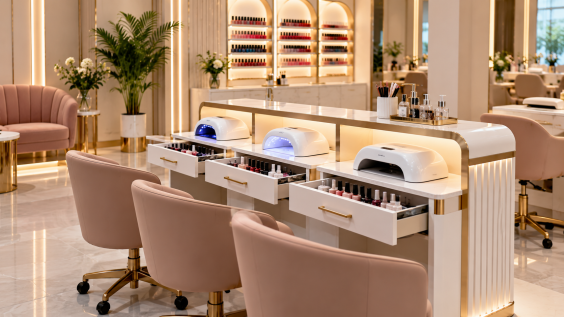
Views: 28The last coat of polish is on, but the appointment is not quite finished. Moving too soon risks a smudged manicure, while staying at the manicure table can hold up the next client. A nail salon dry station gives guests a set place to sit while traditional polish dries. For owners, the question goes […]
More Details
websiteaccess • 28 October, 2026
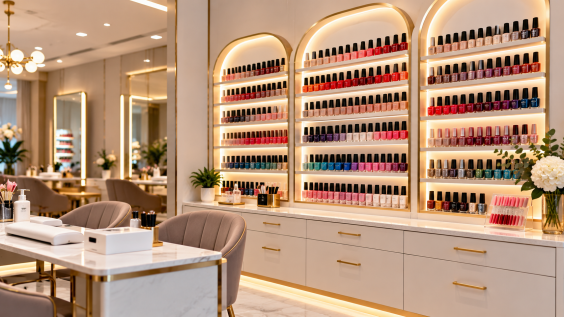
Views: 50A client asks for a soft pink, and the hunt begins. Three bottles look nearly identical, last season’s arrivals are mixed in with older colors, and the technician is checking two different shelves. A well-planned nail polish rack fixes much of that by keeping every shade visible and in a predictable spot. Where you […]
More Details
websiteaccess • 26 October, 2026
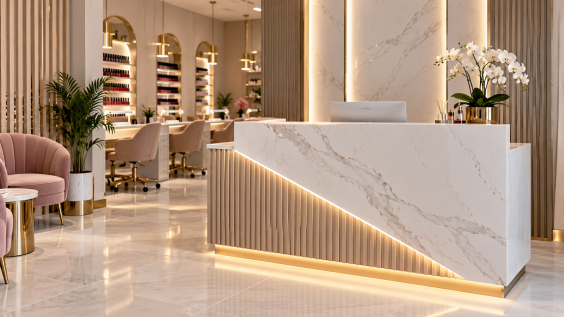
Views: 70A busy Saturday at your nail salon often begins at the front counter. One client is checking in, another is making a payment, and the phone keeps ringing. A poorly planned nail salon reception desk quickly becomes frustrating when there is not enough counter space or storage. Choosing the right desk starts with understanding […]
More Details

tspallc • 20 October, 2026
Views: 175HOW OFTEN SHOULD YOU GET A MANICURE AND PEDICURE? Getting a manicure and pedicure isn’t just a beauty luxury – it is an essential component of personal hygiene, skin health, and self-care. Whether you love maintaining flawless nail art or simply want clean, healthy cuticles and smooth heels, finding the right salon schedule is […]
More Details

tspallc • 20 October, 2026
Views: 132TẦN SUẤT LÀM NAIL BAO LÂU MỘT LẦN LÀ TỐT NHẤT? Làm manicure và pedicure không đơn thuần là dịch vụ làm đẹp cao cấp mà còn là phương pháp thiết yếu để giữ gìn vệ sinh cá nhân, bảo vệ sức khỏe làn da và thư giãn tinh thần. Dù bạn yêu thích […]
More Details

tspallc • 13 October, 2026
Views: 165HOW TO CHOOSE PEDICURE CHAIR COLORS FOR A LUXURY SALON WITH T-SPA Selecting a pedicure chair set with harmonious, sophisticated colors does far more than enhance your salon’s visual aesthetics—it acts as a subtle testament to the quality of your services, encouraging guests to confidently invest in premium spa packages. However, choosing colors that […]
More Details
tspallc • 13 October, 2026
Views: 156Bí quyết chọn màu ghế Pedicure giúp Salon lột xác cùng T-SPA. Một bộ ghế có màu sắc hài hòa, sang trọng không chỉ nâng tầm giá trị thẩm mỹ cho tiệm nail mà còn là lời khẳng định ngầm về đẳng cấp dịch vụ, khiến khách hàng sẵn sàng chi trả cho các […]
More Details

tspallc • 25 September, 2026
Views: 364Long a powerful financial path for Vietnamese families, the Nail salon industry in US now faces fierce competition, shifting client preferences, and stricter State Board inspections. Outdated practices and ignored safety codes can cost clients and create legal risks. T-SPA breaks down the market, income levels, and effective growth strategies to help your salon […]
More Details

tspallc • 25 September, 2026
Views: 344 NAIL INDUSTRY IN THE US: CURRENT SITUATION, INCOME, AND BREAKTHROUGH TRENDS WITH T-SPA Although considered a “financial leverage” that has helped hundreds of thousands of Vietnamese families achieve success in the US, the nail industry is currently facing intense competition, changing customer tastes, and increasingly stringent inspections from the State Board. Continuing to […]
More Details
tspallc • 18 September, 2026
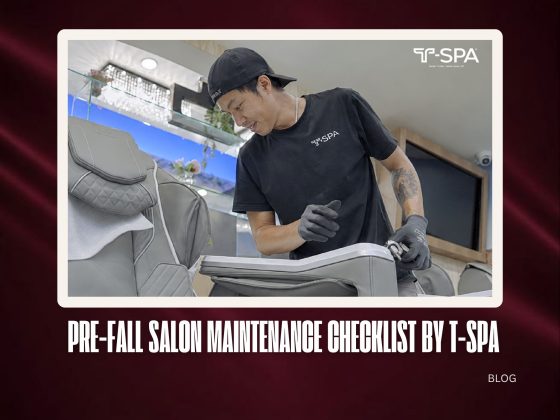
Views: 353When the autumn rush hits your nail salon, experiencing equipment breakdowns like clogged drain pumps, stopped massage motors, or running out of critical supplies during peak weekend hours can disrupt your operations and cause severe revenue loss. Don’t let technical glitches compromise your client experience; Follow T-SPA’s essential Salon Maintenance Checklist below to keep […]
More Details

tspallc • 18 September, 2026
Views: 295NAIL SALON MAINTENANCE CHECKLIST FOR AUTUMN WITH T-SPA As autumn arrives, bringing with it a surge in customers to nail salons, breakdowns such as clogged pedicure chairs, malfunctioning massage machines, or a shortage of replacement parts on peak weekends can disrupt entire business operations and cause significant revenue losses. Don’t let technical issues affect […]
More Details

tspallc • 11 September, 2026
Views: 545In the US beauty industry, technical skill brings clients to your chair, but fluent nail salon English is the real key to earning higher tips and building lasting customer loyalty. Many talented technicians hesitate to speak, leading to avoidable misunderstandings about length, shape, or service preferences. To help technicians master every conversation and project […]
More Details